

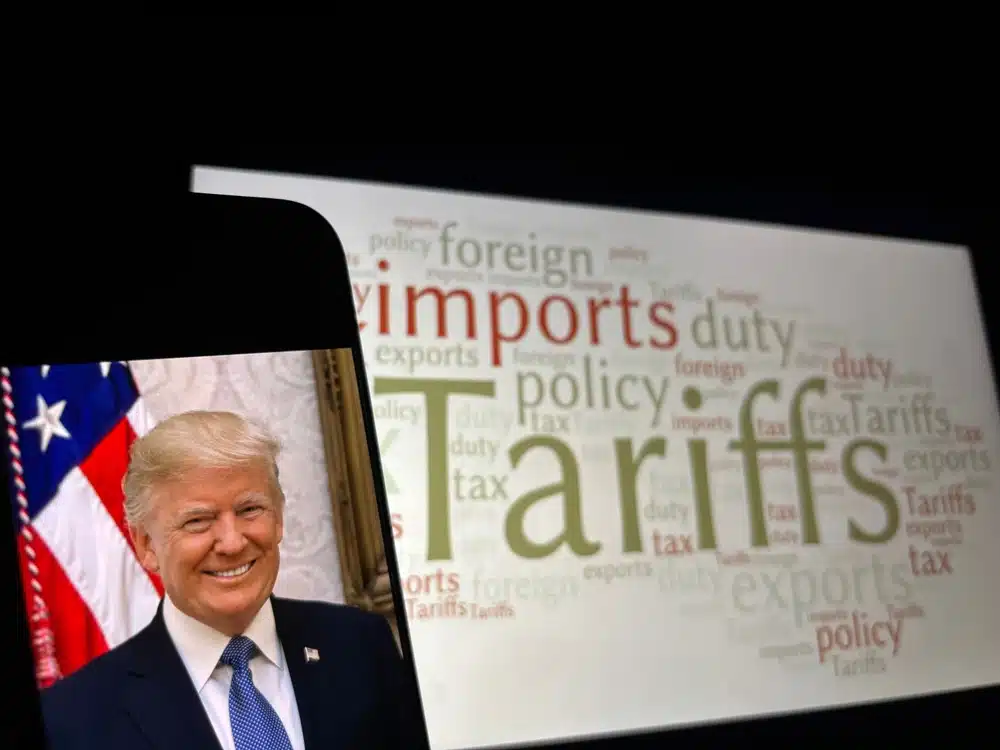
Here’s the thing about Trump tariffs and economic disasters: they don't improve just because you stop paying attention to them. They metastasize.
It's been almost a year and a half since "Liberation Day" — and if you're keeping score at home, we're not liberated. We're hostages in an economic negotiation where one side keeps threatening to shoot itself in the foot while demanding concessions.
And now? Trump wants to slap even more tariffs on Canada. Because apparently the first round worked out so spectacularly well that we need an encore.
Trump Tariffs: The Numbers Don’t Lie
Let me remind you where we are. The S&P 500 is still limping along, down from where it should be if we’d just kept our damn mouths shut and our tariffs holstered. Your 401(k) hasn’t recovered to pre-Liberation Day levels — not really, not when you account for where it would be without this self-inflicted chaos. Consumer prices are up across the board. Small businesses that survived the initial tariff tsunami are now wondering if they’ll make it through round two.
And those “deals on the horizon” we were promised eighteen months ago? Still on the horizon. Funny how horizons work — they keep receding the closer you try to get to them.
Treasury Secretary Bessant promised us deals with 17 countries back in May 2025. It’s 2026 now. You know how many of those deals actually materialized into functional trade agreements that brought down costs for Americans? Take a guess. Go ahead, be optimistic.
Meanwhile, West Coast ports are still operating at diminished capacity. The 35% drop in container imports we saw early last year? It never fully recovered. Some of those longshoremen found other work. Some didn’t. The trucking companies that serviced those ports? The restaurants, the motels, the repair shops in those communities? They adapted, downsized, or closed. That’s not resilience — that’s scar tissue.
And now Trump wants to add fresh wounds by targeting Canada harder.
Canada. Our largest trading partner. The country that shares a 5,500-mile border with us and buys more American goods than China ever did. The country whose contribution to America’s fentanyl crisis was so microscopically small it barely registered as a rounding error in the statistics. That Canada.
The justification keeps shifting. It was fentanyl. Then it was “unfair trade practices.” Now it’s some vague gesturing about national security and “taking advantage of American generosity.” It’s economic policy by Mad Libs, where you just fill in whatever sounds tough and hope your base doesn’t check the receipts.
Here’s what targeting Canada actually accomplishes: it makes everything more expensive. Canadian lumber? That’s American homebuilders paying more, which means American homebuyers paying more. Canadian energy? That’s higher heating costs for Americans in the northern states. Canadian agricultural products, auto parts, manufactured goods — all of it flows across that border in both directions, and tariffs don’t punish Canada. They punish us.
Warren Buffett said it eighteen months ago, and it’s still true now: “Trade should not be used as a weapon.” Trade is how economies grow. It’s how countries specialize in what they do best and benefit from what others do well. It’s collaboration, not conquest.
But Trump chose conquest. He’s still choosing it. And we’re still paying for Trumps Tariffs.
What This Looks Like on Main Street
Walk into any retail store and you can see it. Selection isn't what it used to be. Prices are higher than they should be. Small businesses are operating on razor-thin margins, absorbing costs they never planned for, praying they can hang on until someone in Washington remembers that trade wars aren't actually easy to win.
Some international suppliers just stopped dealing with American businesses entirely. Too much chaos, too much uncertainty, not worth the headache. Can you blame them? When your customer's government might randomly decide to impose a 100% tariff on your product next Tuesday, why bother?
The holiday season is coming again. Retailers need predictability to plan inventory, negotiate contracts, set prices. They're not getting it. What they're getting is the economic equivalent of a toddler with a hammer, smashing things and calling it construction.
And here's the part that should terrify you: this doesn't end when the tariffs end. Trade relationships are built on trust, and we've burned through eighteen months of trust with allies who used to consider us predictable partners. Canada is making deals with Europe. Mexico is strengthening ties with Asian markets. Our allies are building economic arrangements that work around us, not with us.
You can't unring that bell. You can't un-burn that bridge. The American brand — the idea that we're a stable, reliable trading partner — is damaged. Maybe permanently.
A Self-Inflicted Wound
Trump inherited the strongest economy in the world. Not the best recovery, not the most improved — the actual strongest economy. And he decided that wasn’t enough. He needed to prove something, to someone, for some reason that changes depending on which rally you attend.
The result? We’re weaker. Our workers are struggling. Our businesses are operating with one hand tied behind their backs. And now he wants to make it worse by going after Canada again.
Four years of this seemed unbearable eighteen months ago. Now we’re staring down the barrel of the rest of his term, and the question isn’t whether we’ll feel more pain. We will. The question is how long the recovery will take after he’s done, and whether our trading partners will even want us back.
Tell Us What You’re Seeing
The Trump tariffs aren’t some abstract policy debate — they show up in your bank account and on store shelves. What are you seeing where you live? Has your business been hit by tariffs? Are you paying more for basics that used to be affordable? Join the conversation — because this affects all of us, and the people making these decisions won’t stop unless we make them hear us.
Ben Dover

Leave a Reply
You must be logged in to post a comment.