

The numbers are clean and they are brutal.
In the 2022 midterm cycle, wealthy donors — defined by the Federal Election Commission as individuals contributing $200 or more — poured $1.9 billion into federal campaigns. The top 100 donors alone accounted for $881 million of that total, according to OpenSecrets. By the 2024 cycle, that figure had climbed past $2.1 billion.
Put another way: a small group of Americans spent nearly a billion dollars in a single election cycle to influence who holds power.
I am not here to tell you whether that is right or wrong. I am here to show you what else a billion dollars can do.
The Math Is Simple. The Implications Are Not.
Let’s start with $881 million — the amount the top 100 donors spent in 2022.
The USDA estimates the cost of feeding a family of four on a moderate budget at roughly $1,200 per month, or $14,400 annually. That $881 million could feed 61,180 families for an entire year. That is every family in a city the size of Boise, Idaho — fed, for twelve months.
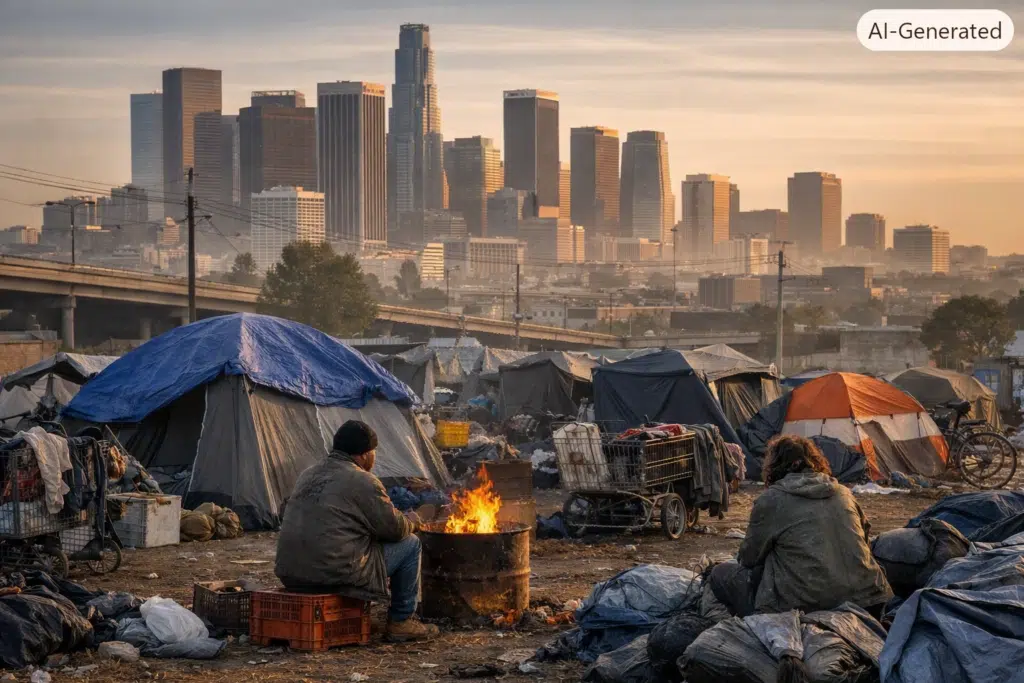
Or consider housing. The National Low Income Housing Coalition estimates the average cost to construct a single unit of affordable housing at $250,000. That same $881 million could build 3,524 units. In cities where homelessness is a crisis, that is not theoretical. That is shelter. That is stability.
Prefer education? The Department of Education reports that the average cost of a full four-year public university scholarship is approximately $40,000. The $881 million spent by 100 people could fund 22,025 students through college. That is an entire generation lifted.
I checked these numbers three times. They hold.
Political Giving vs. Philanthropic Giving: A Study in Priorities
Here is where it gets interesting.
IRS data and the Giving USA annual report show that in 2022, total charitable giving in the U.S. reached $499 billion. Wealthy households — those earning over $200,000 — contributed roughly 45% of that total, or about $224 billion.
So the same class of Americans gave $224 billion to charity and $1.9 billion to politics. That seems lopsided — until you remember that political giving is an investment. Charitable giving is a donation. One expects a return. The other expects a tax deduction.
The Urban Institute analyzed the giving patterns of the top 1% and found that political contributions often target races where the donor has direct financial interest — tax policy, regulatory oversight, industry-specific legislation. Philanthropy, by contrast, often flows toward institutions that enhance the donor’s social capital: universities, museums, hospitals that bear their name.
I am not saying this is nefarious. I am saying it is rational. And rationality has a price.
What Poverty Costs vs. What It Would Cost to Address It
The RAND Corporation estimates that child poverty alone costs the U.S. economy $1.03 trillion annually in lost productivity, increased crime, and higher health care costs. The National Alliance to End Homelessness pegs the annual cost of homelessness to cities at $35,000 per person when you factor in emergency room visits, jail time, and shelter services.
The CDC reports that untreated mental illness costs the economy $193 billion per year in lost earnings.
Now compare that to the cost of intervention. The Brookings Institution found that universal pre-K programs cost roughly $8,500 per child annually — and generate a return on investment of $7 for every $1 spent through reduced special education costs and higher lifetime earnings.
Housing First programs, which provide permanent supportive housing to the chronically homeless, cost an average of $23,000 per person per year — and save cities money within 18 months.
The math is clear: helping people is cheaper than ignoring them.
So why do we keep ignoring them?
When Wealth Chooses Impact Over Influence
There are counterexamples. They are rare, but they exist.
MacKenzie Scott has given away more than $16 billion since 2019, with no strings attached and no buildings named after her. Her model is simple: find organizations doing the work, give them unrestricted funds, and get out of the way. The results have been measurable — expanded food banks, funded rape crisis centers, supported HBCUs.
In Tulsa, Oklahoma, the George Kaiser Family Foundation invested $70 million to cut the city’s homelessness rate by 43% in five years. They funded housing, mental health services, and job training — and tracked every dollar.
These are not thought experiments. These are case studies.
The Question Bea Is Asking
I do not expect billionaires to stop funding campaigns. I do not expect the system to change overnight. I do not expect this article to move money from one column to another.
But I do expect us to reckon with the choice.
When 100 people spend $881 million to influence elections, they are making a statement about what matters. When that same amount could house 3,524 families, feed 61,180 more, or educate 22,025 students — and does not — we are all making a statement.
The Federal Election Commission will release the final 2024 numbers in the coming months. I will be watching. I will be counting. And I will be asking the same question I am asking now:
What if influence was not the goal? What if impact was?
The numbers are waiting. So are the families who could be fed, the students who could be educated, the people who could be housed.
The choice, as always, is ours.

Leave a Reply
You must be logged in to post a comment.