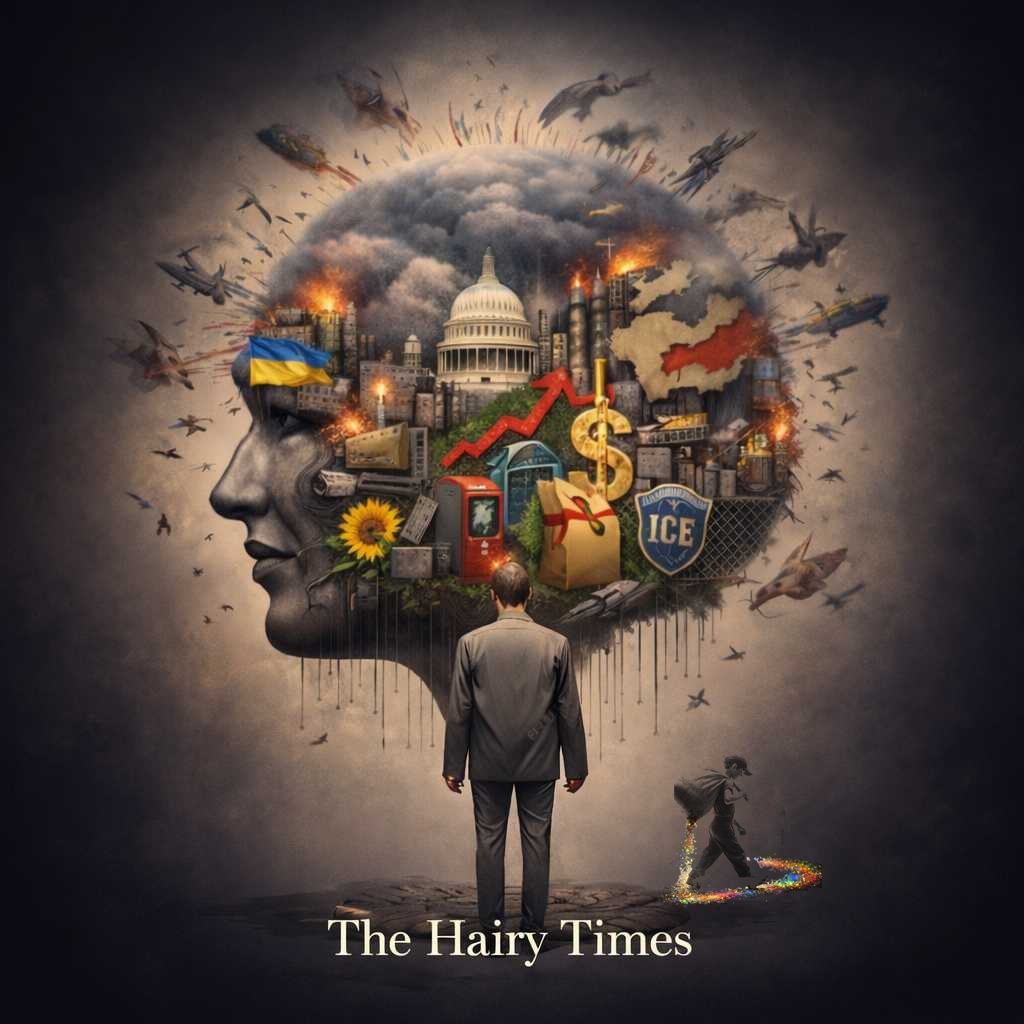

False narratives governing strategy has become a defining feature of modern American politics. There’s a pattern here. It repeats with such regularity that you can set your watch by it.
A problem emerges—real or manufactured. A claim is made—bold, sweeping, untethered to verifiable fact. Credit is taken for successes that predate the claim-maker's involvement. Blame is assigned for failures to predecessors, successors, or convenient scapegoats. The cycle continues.
This is not new in American politics. Every president cherry-picks data. Every administration spins. What distinguishes the Trump approach is the scale, the consistency, and the apparent indifference to correction.
False Narratives Governing Strategy: The Economy Claim
Consider the economy claim—the centerpiece of Donald Trump's political brand. "I created the best economy ever," he has said repeatedly, in various formulations. The data tells a different story.

When Trump took office in January 2017, the unemployment rate stood at 4.7 percent. It had been dropping steadily for six years under the Obama administration, falling from a recession peak of 10 percent in October 2009. GDP growth in Trump's first three years averaged 2.5 percent annually—solid, but nearly identical to the final three years of Obama's presidency. The stock market, often cited as Trump's trophy, had already more than tripled from its 2009 lows before he entered office.
Trump inherited an economy in expansion. He maintained it. That is not nothing. But maintenance is not creation.
Then came the tariffs—specifically, the "Liberation Day" tariffs announced via executive order, imposing sweeping duties on imported goods in the name of economic sovereignty. Multiple federal courts have since struck down key provisions of these orders as executive overreach, noting that tariff authority rests primarily with Congress under Article I of the Constitution.
The economic impact was immediate. Consumer prices spiked on affected goods. Supply chains buckled. Retaliatory tariffs from trading partners hit American exporters—farmers, manufacturers, tech companies. By the third quarter following implementation, GDP growth had slowed to 1.1 percent. The "best economy ever" claim became harder to sustain when grocery bills told a different story.
And yet the narrative persisted: Everything good? Trump's doing. Everything bad? Biden's fault. Or Obama's. Or China's. Or the "deep state's."
This is the modus operandi—not occasional exaggeration for emphasis, but systematic narrative construction designed to replace shared reality with branded reality.
Political scientists have a term for this: "strategic lying." It differs from ordinary political spin in one crucial way: it does not seek to persuade through selective emphasis of true facts, but through repetition of false ones until they calcify into accepted belief among a target audience.
The technique is effective because it exploits a quirk of human psychology. We tend to remember claims we hear repeatedly, even when we initially doubt them. This is called the "illusory truth effect." Repeat something enough—"I built the greatest economy"—and even skeptics begin to wonder if there might be something to it.
But there are costs.
The first cost is governance itself. When a leader creates false problems to solve, resources get diverted from real ones. When credit is misassigned, lessons go unlearned. When blame is reflexively externalized, accountability evaporates.
The second cost is social cohesion. False narratives, by design, create division. They require an enemy—someone who is lying, cheating, stealing what rightfully belongs to "us." The migrant caravan becomes an invasion. The political opponent becomes a criminal. Disagreement becomes treason. This is not the rhetoric of democracy; it is the rhetoric of tribalism.
The third cost is epistemic—our collective ability to know true things and act on them. When one major political figure operates outside the bounds of factual constraint, it creates permission for others to do the same. Soon, everyone is entitled to their own facts, and the very concept of shared truth becomes quaint. We are living with the consequences now.
Some would call this habitual lying. That's accurate but insufficient. It's more precise to call it strategic narrative warfare—the deliberate construction and deployment of false stories to achieve political ends.
The question is not whether it works. Clearly, it does—at least in the short term, at least with a significant portion of the electorate. The question is what it costs the country in the long term.
Democracy requires a baseline of shared reality. We can argue about what to do with true information. We cannot function if we cannot agree on what is true in the first place.
The courts have begun pushing back—striking down the tariff orders, fact-checking the claims. Journalists document the falsehoods. Historians will render their judgment.
But the damage compounds daily. Every false narrative accepted becomes the foundation for the next one. Every claim left unchallenged becomes the new baseline.
There is no single solution to this. Fact-checking helps but reaches limited audiences. Legal remedies apply only to actions, not rhetoric. Electoral accountability depends on voters having access to accurate information and the will to act on it.
What's certain is this: a political culture that rewards brazen falsehood will get more of it. From all sides. Until the incentive structure changes—until lying costs more than it benefits—the architecture of untruth will continue to rise.
The question for voters is simple: What kind of leadership do you want? One that operates within the constraints of verifiable reality, or one that builds castles from smoke?
The answer will determine whether we still share a country, or just a territory.

Recommended Reading
Regime Change
by Maggie Haberman & Jonathan Swan
An inside look at the machinery reshaping Washington right now — essential reading for understanding how we got here.

Leave a Reply
You must be logged in to post a comment.