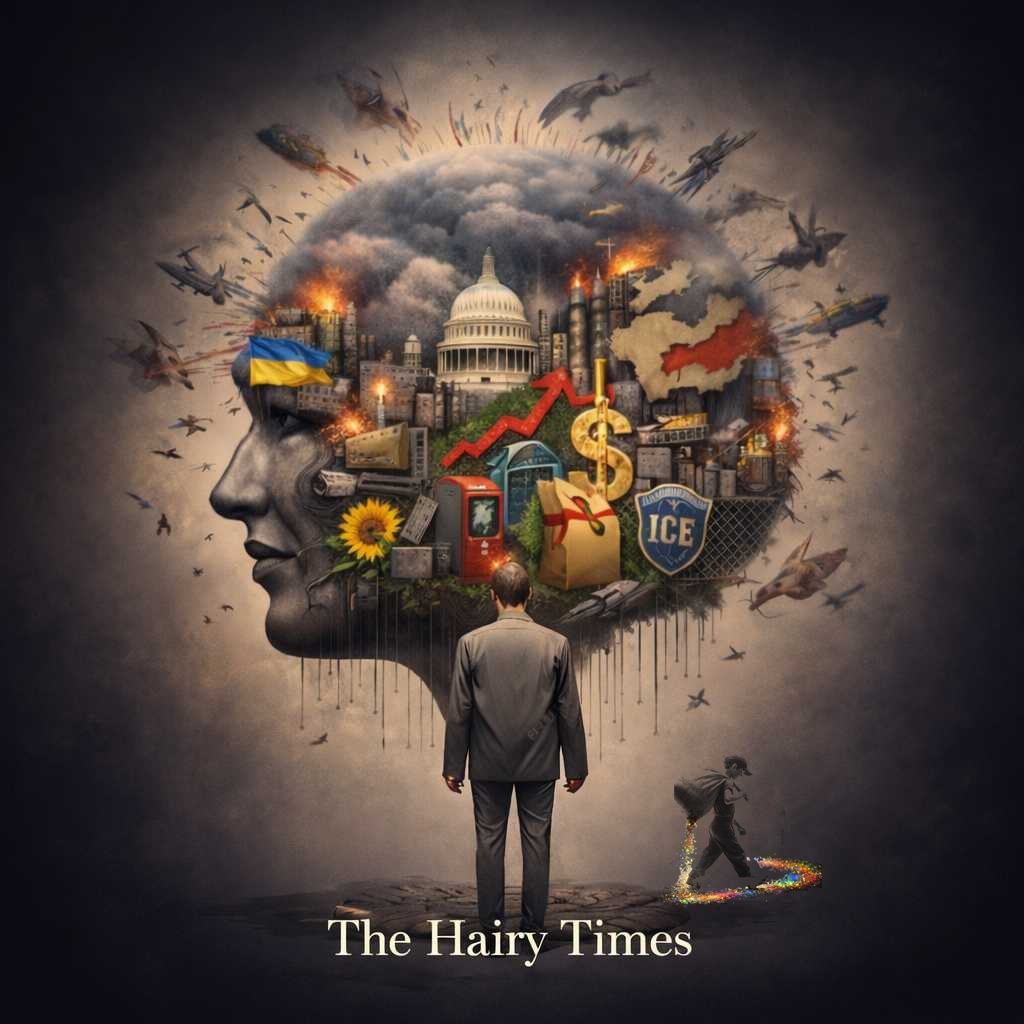


Here's what I know to be true: We're tired. Bone-tired of the anger. Exhausted from the constant churn of outrage, the daily feed of cruelty, the way hate has become the loudest voice in almost every room—physical or digital. In America and across the world, we've built fortresses of rage and called it strength. We've confused cynicism with intelligence. And somewhere along the way, we forgot that goodness isn't weakness—it's the hardest work there is.
The world didn't become this way overnight. We got here one choice at a time, one click at a time, one moment of choosing division over connection. And if we're being honest—really honest—we need to acknowledge that anger has been easier than hope. It requires less vulnerability. Less risk. When you're angry, you don't have to believe in anything. You just have to be against something.
But here's the truth that anger doesn't want you to remember: Most people are good. Not perfect. Not saints. Just good people trying to do right by their families, their neighbors, their own conscience. They're coaching Little League on Tuesday nights. They're checking on elderly neighbors. They're teaching children to read, fixing cars for friends who can't afford mechanics, organizing food drives, fostering dogs, making space at their tables for whoever needs feeding. This quiet goodness has always been the backbone of every community, everywhere.
The problem isn't that goodness disappeared. It's that we stopped amplifying it. We stopped electing it. We stopped rewarding it. We made spectacle more valuable than substance, and outrage more clickable than compassion.
So yes, we need leaders who understand that governing isn't performance art. We need people in positions of power who wake up asking "How do I make life better for people?" instead of "How do I win the news cycle?" We need leaders who remember that their job is to bring out the best in us, not weaponize the worst.
But—and this is important—we can't wait for them to save us.
Leadership matters. Of course it does. The tone set from the top ripples down through everything. When leaders model cruelty, they give permission for cruelty. When they traffic in division, they make division normal. We've seen this play out in real time, in country after country, where demonizing "the other" becomes policy and fear becomes strategy.
But the flip side is just as true. When leaders choose courage over comfort, when they appeal to our shared humanity instead of our tribal instincts, when they tell us the truth and trust us to handle it—we rise. We become the people we needed all along.
Look at what happened in the aftermath of disasters, any disaster, anywhere. The official response often stumbles. But neighbors don't. Strangers form human chains. People with boats rescue people they've never met. Communities that were supposedly divided suddenly remember they're just people who live on the same street.
That's who we are when we're not being told we're enemies.
This doesn't mean ignoring real problems or pretending injustice doesn't exist. Hope isn't about toxic positivity or burying our heads in sand. It's about doing the hard work of fixing what's broken—together. It's about looking at the wreckage and saying "We can build something better here."
I think about the teachers who stayed after school every day during the pandemic, making sure kids had meals and internet access and someone who believed in them. I think about the healthcare workers who held phones so dying patients could say goodbye to families kept away by protocols. I think about the young people organizing for change, not with guns or hate, but with strategy and stamina and an unshakeable belief that the world can be different.
These aren't saints. They're just people who decided that goodness required action, not just intention.
Getting back to the good side of the island—that fun side, that human side, that side where we remember how to laugh with each other instead of at each other—won't happen because we wish for it. It happens when we choose it. Daily. Hourly. In a thousand small ways that feel insignificant until they're not.
It happens when we elect leaders who understand that their power is a trust, not a weapon. Leaders who can disagree without dehumanizing. Who can tell hard truths without scapegoating. Who understand that strength means protecting the vulnerable, not punishing them.
And it happens when we decide, individually and collectively, that we're done letting the worst voices speak for us. That we're done letting algorithms feed us rage for profit. That we're done accepting cruelty as inevitable.
The positive doesn't overtake the negative by being louder. It overtakes it by being more persistent. By showing up. By refusing to let hate have the last word, or the only word, or even the most common word.
Evil—real evil—counts on our exhaustion. It counts on good people deciding it's too hard, too risky, too thankless to keep trying. It wants us to believe the fight is already lost.
But here's what evil can never quite grasp: Goodness is stubborn. It's relentless. It plants gardens in war zones. It teaches children to read in refugee camps. It finds reasons to laugh even when crying seems like the only reasonable option.
The good side of the island is still there. It's been there all along, waiting for us to remember the way back. We know the path. We've always known it.
We start by choosing leaders who'll walk it with us. And then we do the walking ourselves.

Leave a Reply
You must be logged in to post a comment.