

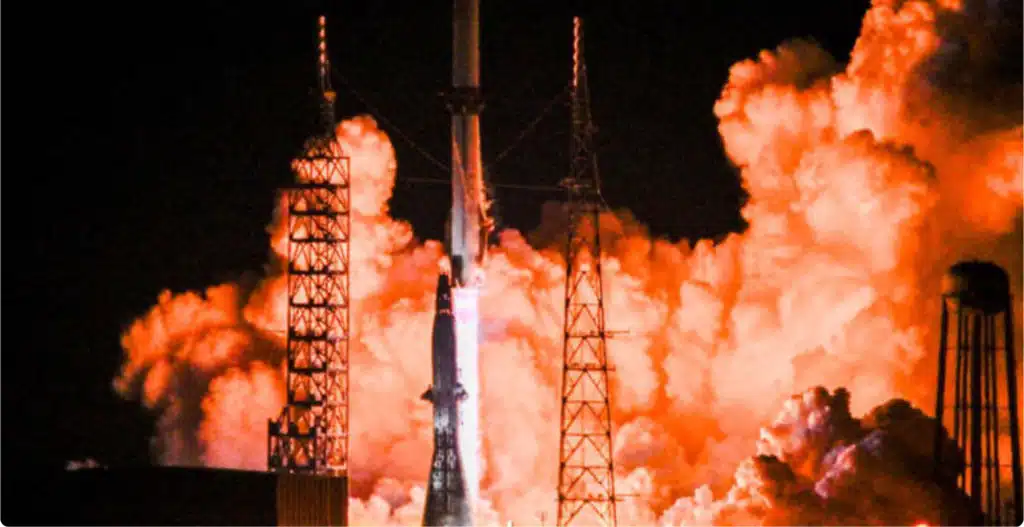
The Blue Origin New Glenn rocket has given the space race a new spectacle, and it's not the one Jeff Bezos wanted.
Blue Origin's New Glenn rocket successfully reached orbit on its maiden flight Thursday morning—a genuine achievement that took nearly a decade of development. But the landing? The company's massive booster, intended to touch down on a drone ship in the Atlantic, instead became an expensive artificial reef. The booster missed its target and plunged into the ocean.
Blue Origin called it "a successful first flight." Technically accurate. Also technically what you say when half your mission objectives end up underwater.
Compare this to SpaceX's approach: blow things up early, often, and loudly. Learn fast. Iterate faster. Elon Musk's Starship program has produced a highlight reel of spectacular failures—rockets exploding mid-air, crash-landing in fireballs, disintegrating on re-entry. The internet mocked each one. Musk posted memes about them.
Yet Starship has now completed multiple test flights, successfully caught its Super Heavy booster with mechanical arms (the "chopsticks" maneuver that seemed impossible), and is rapidly approaching operational status. NASA has already awarded SpaceX the contract to use Starship as the lunar lander for Artemis III.
The difference isn't technical capability—Blue Origin's engineers are world-class. The difference is philosophy.
Blue Origin has spent 25 years operating under the motto "Gradatim Ferociter"—step by step, ferociously. It sounds measured and professional. It looks like caution wearing the mask of diligence. The company conducted 27 suborbital tourist flights with New Shepard before attempting orbital flight with New Glenn. SpaceX was landing orbital-class boosters routinely by 2017.
Bezos has the resources—he's sold billions in Amazon stock to fund Blue Origin. He has the vision—his goal of millions of people living and working in space is genuine. What the company appears to lack is urgency.
In fairness, the New Glenn flight represents real progress. Reaching orbit on a first attempt is rare and significant. The rocket deployed its payload successfully. Blue Origin's incremental approach minimizes catastrophic failures and maximizes PR safety. No one can make a viral video mocking a booster that "only" missed its landing.
But we should ask: does this approach win races?
The commercial space industry isn't graded on style points. It's measured in payload capacity, launch cadence, cost per kilogram, and contract wins. SpaceX launches roughly once every three days on average. It dominates the commercial launch market. It's the only American company currently flying astronauts. Its failures have been learning opportunities that compressed years of development into months.
Blue Origin's careful methodology has produced… fewer failures and fewer successes.
Space is hard. Getting to orbit on your first real attempt deserves recognition. But the relevant question isn't whether Blue Origin can eventually land boosters and compete with SpaceX. It's whether "eventually" arrives before the race is already over.
The broader implication extends beyond rocketry. In rapidly evolving fields—technology, energy, medicine—perfectionism often loses to iteration. The competitor willing to fail publicly, learn quickly, and adapt aggressively usually laps the one still checking their notes.
Bezos proved with Amazon that he understands this. Perhaps Blue Origin will too.
Or perhaps the Atlantic Ocean will continue to receive very expensive deliveries.

Leave a Reply
You must be logged in to post a comment.