
We need to talk about what’s happening to us.
Is this the America we still believe in?
Not in the abstract way politicians prefer, where problems become talking points and suffering becomes statistics. But honestly. As people who have to live in the country we’re creating together, who have to look our children in the eye and tell them what kind of future we’re building.
The question being asked — “Are we better off now than we were a year ago, two years ago?” — deserves a real answer. And the truth is complicated, which is exactly why we need to sit with it.
Let’s start with what we can see.
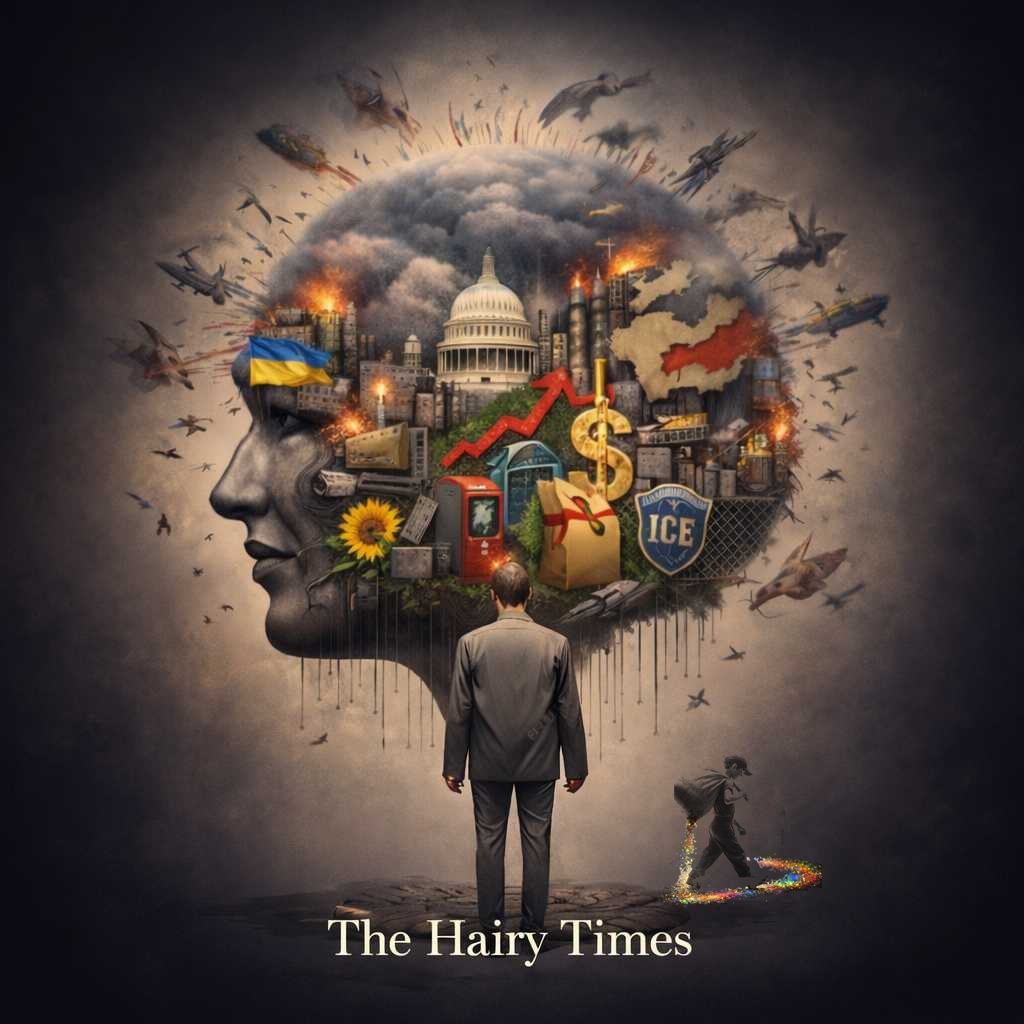
Three more deaths at the hands of ICE. Families separated at borders, people who came here desperate turned into enforcement statistics. Whatever your stance on immigration policy, we used to agree that how we treat vulnerable people says something essential about who we are. That cruelty should never be policy. That’s not a political position — that’s a baseline of human decency.
The brinkmanship with Iran, tensions in the Strait of Hormuz that could reshape the global economy, military decisions made without congressional approval or meaningful public debate. We’ve been here before. We know what happens when one person’s certainty becomes everyone’s crisis. Wars started on thin pretense don’t make nations great — they make them tired, broke, and morally compromised.
The elimination of USAID, cutting off assistance to some of the world’s poorest people while the wealthiest consolidate more power. Trade wars that hurt farmers and workers while being sold as strength. The message seems to be: we’re great when we close our fists, when we take care of only ourselves, when compassion is weakness.
But here’s what troubles me most, and what I hear in your question: the feeling that something deeper has shifted. The hate. The anger. The casual corruption. The normalization of a leader who mocks, demeans, gives childish nicknames to critics like a playground bully with nuclear codes. The daily assault on truth itself, where reality becomes whatever serves power in that moment.
This is the hard part. This is what we have to acknowledge before we can find our way forward.
Because you’re right — this isn’t making America great. It’s making us smaller, meaner, more afraid. It’s teaching our children that strength means domination, that leadership means never admitting error, that disagreement deserves punishment instead of debate.
That’s not the vision I believe most Americans hold.
But here’s where hope lives: in the fact that we’re asking these questions at all.
The America I believe in — the one I think you’re invoking — never existed perfectly. It was always a promise we were trying to keep, a vision we were stumbling toward. What made us great wasn’t that we got everything right. It was that we kept trying, kept arguing, kept holding each other accountable to our stated ideals even when we failed them.
And that’s still happening. Right now.
Look past the headlines for a moment. You’ll find teachers spending their own money on classroom supplies because they believe in their students. Doctors volunteering at free clinics. Neighbors organizing food banks, defending each other’s rights, showing up for each other across lines of difference. Communities that refuse to let hate define them. Young people demanding we do better on climate, on justice, on the future they’ll inherit.
This matters enormously. Because while power concentrates at the top, making terrible decisions that affect millions, the actual fabric of America — the daily choices of decent people trying to do right by each other — holds strong.
The path back isn’t complicated, though it’s hard. It requires what it’s always required: people believing that their participation matters, As JFK said “One person can make a difference, and everyone should try.
It means voting, yes. But it also means the smaller acts: joining community boards, attending town halls, speaking up when silence would be easier. It means modeling the leadership we wish we had — leading by example in our own spheres, however small. It means refusing to let cruelty become normal, even when it’s exhausting to resist.
It means teaching our children that real strength is protecting people who need help, that true leadership admits mistakes, that disagreement makes us sharper rather than threatening us. That their country’s character isn’t defined by one administration, one leader, one political moment — but by the collective choices of millions of citizens over time.
The vision we want for our kids is still possible. But only if we claim it.
Not naively. Not by pretending everything is fine. But by acknowledging how far we’ve drifted and then doing the unglamorous, difficult work of steering back. By building the country we believe in from the ground up, in ways that can’t be undone by any single election.
Are we the people better off now? Many of us aren’t. But the question isn’t just about where we are — it’s about what we do from here.
Your voice counts. Your participation matters. The conversation you’re inviting people to join is exactly what democracy requires to function: citizens who care enough to ask hard questions and demand real answers.
The America we still believe in — the one that leads with compassion, strength through justice, greatness through decency — isn’t gone. It’s just waiting for enough of us to remember that we’re the ones who have to build it.
So yes. Join the conversation. Share your thoughts. Become a member and join our community and let’s make a difference.
One person can make a difference and we should all try. (I don’t think that can be said to many times)
Starting with you. Starting with now.
AI and I worked on this together.

Leave a Reply
You must be logged in to post a comment.