

Senate confirmation hearings this week: Todd Blanche for Attorney General. Jay Clayton for Director of National Intelligence.
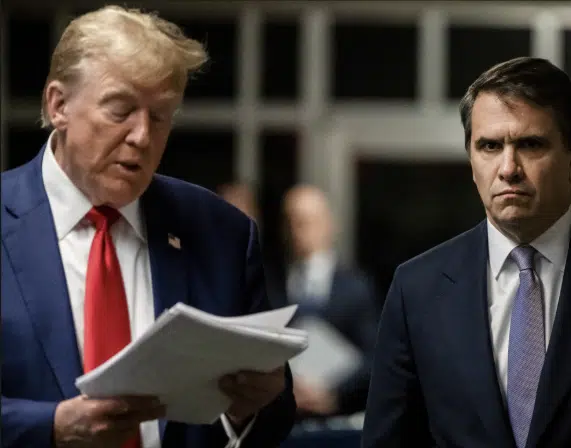
You worked today. Maybe you dropped kids at school, sat in traffic, answered emails that could have been nothing, microwaved something for dinner. Wednesday, July 15th, was probably just Wednesday for you.
Meanwhile, two men sat before the United States Senate seeking confirmation to positions designed — in theory — to protect you, your family, and the foundational principles of this republic. Todd Blanche for Attorney General. Jay Clayton for Director of National Intelligence.
If you caught the local news tonight, you got maybe fifteen seconds. The national outlets gave you a highlight reel — a testy exchange here, a viral moment there. What you didn’t get was the full picture. And the full picture, frankly, should keep you up tonight.
I’ve covered confirmations for two decades. I’ve watched qualified nominees stumble over complex legal theory. I’ve seen brilliant minds go temporarily blank under pressure. What I witnessed Wednesday wasn’t that.
What I witnessed was deliberate incompetence. Weaponized forgetfulness.
The Art of Answering Nothing
Todd Blanche — a man seeking to become the chief law enforcement officer of the United States — suddenly couldn’t recall basic legal standards when pressed by senators. Asked whether he would commit to prosecuting crimes without political interference, he offered word salad. “I believe in the rule of law, and I think we all share that commitment, and I would certainly approach the position with that framework in mind.”
That’s not an answer. That’s verbal camouflage.
Jay Clayton, nominated to oversee the entire U.S. intelligence community, couldn’t remember whether he’d discussed surveillance practices with the President. Couldn’t commit to providing Congress with unredacted intelligence assessments. Couldn’t define the boundaries between loyalty to the Constitution and loyalty to the person who nominated him.
“I don’t recall those specific conversations.”
“I’d have to review that matter more closely.”
“That would depend on the circumstances.”
Fifteen variations of nothing.
These are not stupid men. Blanche is a skilled defense attorney. Clayton navigated the complexities of the Securities and Exchange Commission. They know how to answer direct questions. They simply chose not to.
Why These Senate Confirmation Hearings Matter More Than You Think
The Attorney General controls federal prosecutions. Every investigation into corruption, civil rights violations, corporate malfeasance — it runs through that office. The AG decides who gets investigated and who doesn’t. Who faces justice and who walks.
The Director of National Intelligence synthesizes information from seventeen intelligence agencies. This person briefs the President on threats to national security. This person controls what Congress — and by extension, the American people — learns about those threats.
These aren’t ceremonial positions. These are the guardrails. We’ve traced how these same fights over federal power are playing out elsewhere, too.
And Wednesday, we watched two men audition to remove those guardrails entirely.
When Senator Whitehouse asked Blanche if he would commit to not interfering with ongoing investigations for political purposes, Blanche wouldn’t commit. When Senator Warner asked Clayton whether he would resist pressure to politicize intelligence assessments, Clayton talked about “frameworks” and “good faith.”
Sycophants don’t announce themselves. They simply refuse to promise independence.
The Noise Machine Wants You Exhausted
I know. I know. It’s every day now. Another controversy. Another norm shattered. Another hearing, another scandal, another thing you’re supposed to care about while you’re trying to pay rent and keep your head above water.
That’s the point.
The constant chaos isn’t a bug — it’s the strategy. Flood the zone. Overwhelm the public’s capacity to track it all. Make governance so exhausting to follow that people tune out entirely. Then do whatever you want in the silence.
You’re not stupid for feeling overwhelmed. You’re human. You have a life to live.
But that’s exactly what makes these moments so dangerous. Because while you’re living your life — as you should be — the architecture of accountability is being quietly dismantled.
What Happens Next
These nominations will likely proceed. The Senate may raise objections, but the votes will probably fall along predictable lines. Blanche and Clayton will assume their positions. And then the real work begins.
Will investigations into the previous administration’s critics accelerate while allegations against allies disappear? Will intelligence assessments start reflecting political preferences rather than ground truth? Will career prosecutors find themselves reassigned when they pursue inconvenient cases?
We won’t know immediately. These things happen slowly. A pressure point here. A delayed report there. A quiet resignation you never hear about.
By the time the damage is visible, it’s often irreversible.
The November Equation
Here’s what I’ll say, and I’ll say it plain: elections have consequences. The one coming in November will determine whether this trajectory continues or whether we restore some version of checks and balances.
I’m not naive. I don’t believe any election solves everything. I don’t think any party has a monopoly on virtue. But I do know that institutional independence matters. I know that the Attorney General should fear the law more than the President. I know that intelligence should inform policy, not serve it.
Wednesday’s Senate confirmation hearingswere a test. Not of Blanche and Clayton — they showed us exactly who they are. It was a test of whether we’re still paying attention.
So here’s my question for you: Are you? Are you tracking the systematic expansion of ICE beyond anything resembling its original mandate? Are you watching as “Trump’s war” — whatever that ultimately means — unfolds with virtually no congressional debate? Are you noticing how quickly “affordability” became the talking point while wages stagnate and costs climb?
How many issues can one administration generate before we simply accept chaos as normal?
You don’t have to watch every hearing. You have a life. But you do need to vote in November like it matters. Because if Wednesday taught us anything, it’s that the people seeking power are counting on you being too tired to stop them.
Harry Tukis, Sr. Political Reporter, The Hairy Times
What issue from this administration concerns you most? Send your thoughts to tips@thehairytimes.com.

Leave a Reply
You must be logged in to post a comment.