

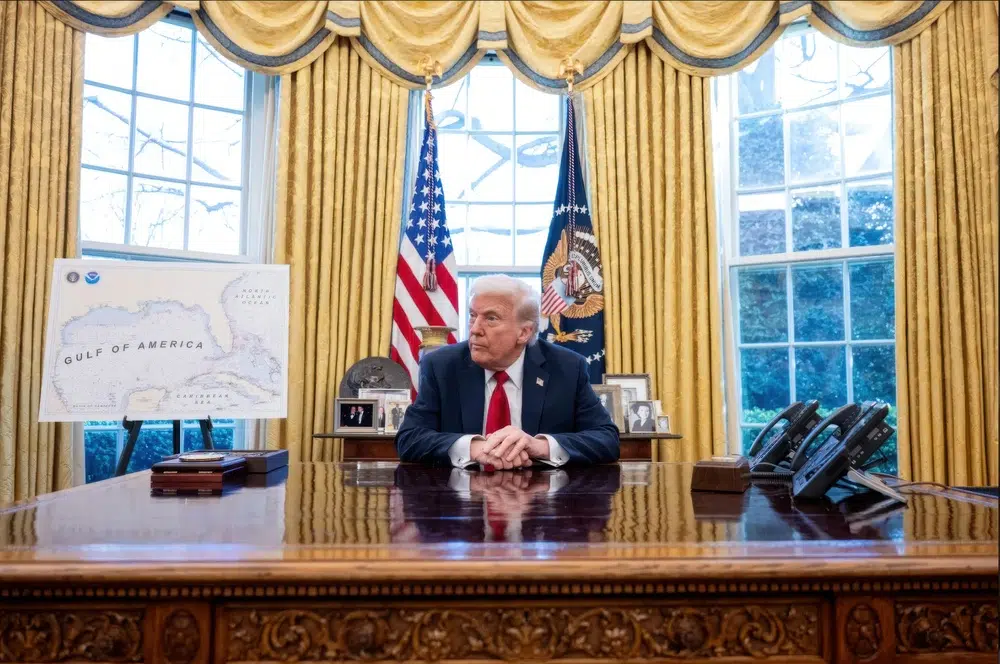
The president addressed the nation last night, and if you believed what you heard, American elections are under siege. Rampant fraud. Compromised systems. Democracy on the brink. Here’s what President Trump didn’t tell you about voter fraud.
It was a masterclass in urgency. Also, largely disconnected from reality.
Let me be clear about something: voter fraud exists. It happens. But the scale the president described — the systemic threat requiring emergency federal intervention — doesn’t match what the data actually shows.
According to research compiled by the Brennan Center for Justice and corroborated by multiple studies over the past two decades, there have been approximately 77 documented cases of prosecutable voter fraud across hundreds of millions of ballots cast. That’s not 77 percent. That’s 77 cases. Total.
To put that in perspective: you’re statistically more likely to be struck by lightning than to commit voter fraud. And yet last night, the president spoke as if our polling places were battlegrounds overrun by impersonators and ballot stuffers.
This matters because fear is the most effective lever for expanding power. When people are scared, they’ll hand over authority they’d never surrender in calmer times. I’ve watched this happen in a dozen countries. The script is always the same: manufacture a crisis, position yourself as the only solution, centralize control.
Which brings us to what the president is actually proposing — and why Andrew Hahn’s recent analysis on federal power and election control deserves your full attention.
The Numbers Don’t Support the Narrative
Heritage Foundation — hardly a left-leaning organization — maintains a database of election fraud cases. As of their latest update, they’ve identified just over 1,400 proven instances of voter fraud since 1982. Across forty years. Across billions of votes cast.
Most of these cases involve small-scale violations: someone votes in two states by mistake, an ex-felon votes before rights are restored, isolated incidents of mail ballot interference. Criminal? Yes. Evidence of widespread systemic fraud requiring federal takeover of election administration? No.
The president didn’t mention these numbers last night. Instead, he painted a picture of chaos and corruption that sounds alarming but lacks evidentiary foundation.
When a leader uses fear without facts, you should ask what they’re really after.
**The SAFE Act and the Illusion of Security**
As Hahn outlined, the Secure and Fair Elections Act isn’t inherently sinister. Paper ballots are a good idea. Upgraded infrastructure makes sense. But the devil, as always, lives in the implementation.
The SAFE Act doesn’t just standardize equipment. It shifts operational oversight from state and local officials — who’ve run elections for centuries — to the Department of Homeland Security and federal commissions. This isn’t about backup systems or cybersecurity support, which DHS already provides. This is about who has final say.
The pitch is protection. The reality is consolidation.
America’s decentralized election system is messy by design. Fifty states, thousands of counties, different machines, different procedures. It’s frustrating if you like uniformity. It’s also nearly impossible to corrupt wholesale. You can’t hack or manipulate thousands of independent jurisdictions the way you could compromise a single federal system.
Centralization creates efficiency. It also creates a single point of failure — and a single point of control.
Here’s the question the president won’t answer: if federal agencies control election operations, what happens when the other party controls those agencies? Because eventually, they will. Power changes hands. The precedents you set today will be used by people you don’t trust tomorrow.
That’s not paranoia. That’s history.
The “Army” That Should Terrify You
Then there’s the “election integrity army” — federal monitors deployed to oversee local vote counting.
I’ve covered elections in countries where armed monitors stand over ballot boxes. I’ve seen what happens when trust between citizens and election officials breaks down completely. This proposal — even in its American, supposedly benign form — walks us toward that cliff.
U.S. election monitoring works because it’s bipartisan and local. Poll watchers from both parties, nonpartisan observers, transparent counting procedures with built-in checks. No single group controls the process.
A federally organized monitoring network changes that equation. It creates a top-down structure answerable to Washington, not to the communities where votes are cast. The potential for intimidation — even unintentional — is significant. Election workers already face harassment and threats. Now imagine they’re being watched by federal monitors whose bosses answer to a president who’s publicly declared the system corrupt.
And notice the language: “army.” Not observers. Not monitors. Army.
Elections aren’t wars. The moment we start talking about them that way, we’ve already lost something essential.
What This Is Really About
Strip away the rhetoric about security and fraud prevention, and you’re left with a straightforward power shift. Authority over elections — historically held by states and localities — moving to Washington. Federal agencies and presidential appointees gaining operational control over the machinery that determines who wins federal office.
If you trust this president, that might sound fine. If you trust the next president, or the one after that, maybe it still sounds fine.
But if you can imagine a future president you don’t trust having these same powers — and you should be able to imagine that, because it will eventually happen — then you should be asking harder questions about what we’re willing to trade for the illusion of perfect security.
Democracy is inherently risky. Decentralization is frustrating. Local control means local mistakes. But concentration of federal power over elections is a cure worse than the disease it claims to treat.
The data shows our elections are remarkably secure. The president’s speech last night suggested otherwise, without evidence to support the alarm.
Ask yourself: when someone tells you to be afraid without showing you the numbers, what are they really asking you to surrender?
Harry Tukis
*Harry Tukis is Senior Political Reporter for The Hairy Times. He has covered elections in other countries and has never once been struck by lightning.*

Leave a Reply
You must be logged in to post a comment.