
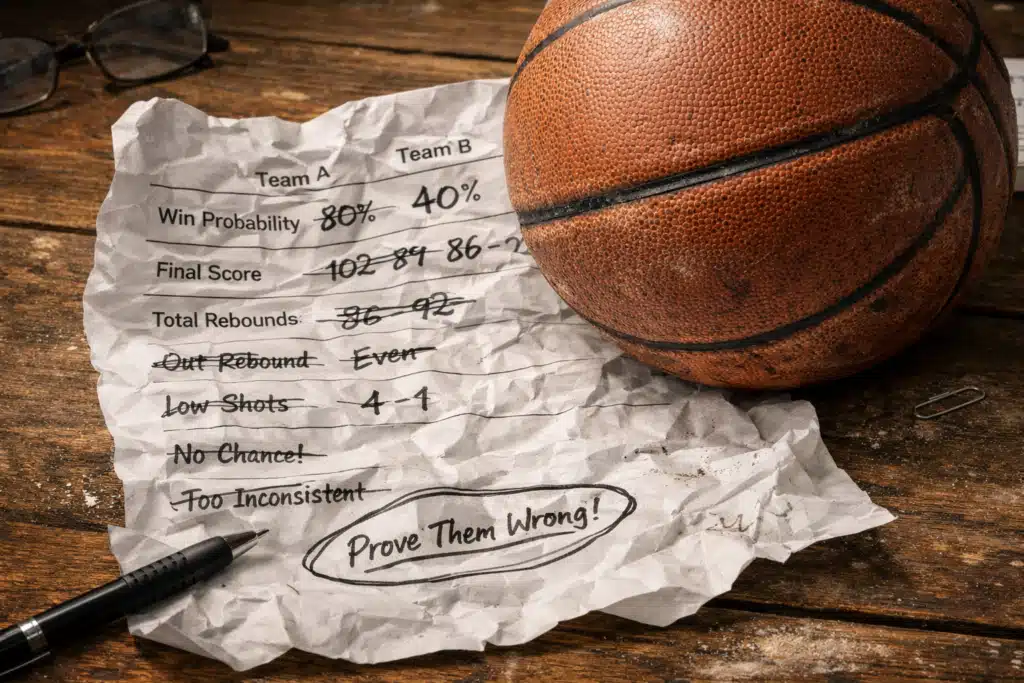
The parade route was planned before the final whistle. Not officially, of course — New York City doesn’t pre-authorize confetti cannons based on optimism alone — but the sanitation workers knew. The barriers were staged. The permits sat in drawers, waiting for a signature that seemed, six months ago, statistically improbable, they thought they couldn’t win .
The Knicks hadn’t given their fans a playoff run like this in over a decade. The math said they were outmatched. The analysts said their ceiling was a second-round exit. The footnotes in every preview article mentioned “rebuilding” and “next year” and “promising young core.”
Then they won anyway.
Not with flash. Not with the kind of superstar heroics that sell sneakers. They won with defense that felt personal, with rebounds grabbed like groceries from a neighbor’s cart, with the kind of grit that makes highlight reels boring and championship banners possible. Game after game, quarter after quarter, they simply refused to lose in the ways everyone predicted they would.
And when the confetti finally fell — when the city that never sleeps stayed up even later, when subway cars turned into mobile dance parties, when grown men cried into their overpriced beers — it wasn’t just about basketball. It was about being told you can’t, and then doing it anyway with a shrug and a free throw.
The Storm Nobody Saw Coming
Meanwhile, down in Carolina, another footnote was being rewritten in real time. The Hurricanes — a team that plays hockey in a state better known for barbecue and college basketball — put together a season that had analysts scrambling to recalibrate their models. High possession percentages. Shutdown defense. Special teams that weren’t just special, they were surgical.
The playoffs became a masterclass in sustained excellence. While other teams wilted under pressure, Carolina played like they’d read the scouting reports on themselves and decided those reports were fiction. Their fans — yes, hockey fans in North Carolina, they exist and they’re loud — filled arenas with a noise level that made northern traditionalists question their assumptions about where hockey “belongs.”
The celebration parade wound through Raleigh like a fact-checking mission: Yes, this happened. No, we’re not surprised. Were you?
The Human Impact
Talk to Marcus Chen, a Knicks season ticket holder since 2009. He spent fourteen years watching his team rebuild, retool, reimagine, and repeatedly disappoint. “Every year I told myself this was the year I’d give up the tickets,” he said outside Madison Square Garden, still hoarse from screaming. “Every year I renewed anyway. Turns out I was investing in this moment. I just didn’t know when dividends would pay.”
Or ask Sarah Kowalski, who moved to Raleigh for a research job in 2016 and adopted the Hurricanes because “I needed something to do in winter.” She’s now part of a 300-person watch party group that meets every game. “People said hockey wouldn’t work here. People say a lot of things that turn out to be wrong when you actually show up and do the work.”
That’s the throughline — showing up and doing the work while everyone’s writing your obituary.
And Now, The Footnote Becomes the Headline
Which brings us to the U.S. Men’s National Team, currently sitting atop Group D like they were supposed to be there all along. They weren’t. The odds makers gave them a 22% chance of advancing to the knockout rounds (per FiveThirtyEight’s pre-tournament model). The consensus was “respectable showing, moral victory, building for the future.”
They won the group instead.
Here’s what I think happens next, and why I think the 1980 “Miracle on Ice” comparison — while flattering — misses the point entirely.
The Miracle on Ice was exactly that: a miracle. A collection of college kids catching lightning in a bottle, riding momentum and shock value past a Soviet machine that should have crushed them. It was beautiful because it was improbable. It was inspiring because it couldn’t be replicated.
This U.S. team? They’re not miracle workers. They’re prepared. They’ve been scouted, developed, professionalized through systems that didn’t exist in 1980. Their pathway to knockout round success isn’t paved with magic — it’s paved with tactical discipline, depth at every position, and a coaching staff that studied the footnotes everyone else ignored.
Can they win it all? The math says it’s unlikely but no longer absurd. Their defensive structure can frustrate higher-ranked opponents. Their counterattack has teeth. They’ve already proven they can win games they’re supposed to lose, which means the pressure shifts to teams expected to beat them.
I think they make the semifinals. I think they do it ugly — 1-0 grinders, penalty shootouts, games decided by deflections and fortunate bounces that aren’t fortunate at all when you’ve positioned eleven players correctly. I think they lose in the semis to a team with more talent but go down swinging in a way that changes how the next generation of players sees what’s possible.
And if I’m wrong? If they pull off something even bigger? Then we’ll need a new word, because “miracle” implies you didn’t earn it.
The Truth Hiding in the Footnotes
Three different sports. Three different cities. One consistent theme: the gap between “supposed to happen” and “what actually happened” keeps shrinking every time someone decides the footnotes are wrong.
The Knicks were rebuilding. The Hurricanes were in the wrong market. The U.S. Men’s National Team was a few years away. None of those things stopped being technically true. They just stopped mattering when everyone involved decided showing up mattered more than statistical projections.
So here’s my accountability question: What other footnotes are we getting wrong? What other “impossible” outcomes are one good season, one committed fanbase, one tactical adjustment away from becoming parades and confetti and strangers hugging in the streets?
Now it’s your turn: How far do you think the U.S. Men’s National Team goes? Is this year’s run the start of something sustainable, or are we watching another beautiful anomaly? And what underdog story — in sports or otherwise — have you been quietly rooting for while everyone else wrote it off?
Drop your thoughts below. The truth is usually hiding in the footnotes, but sometimes it’s hiding in the comments section from readers who saw it coming all along.
— Eggy

Leave a Reply
You must be logged in to post a comment.