

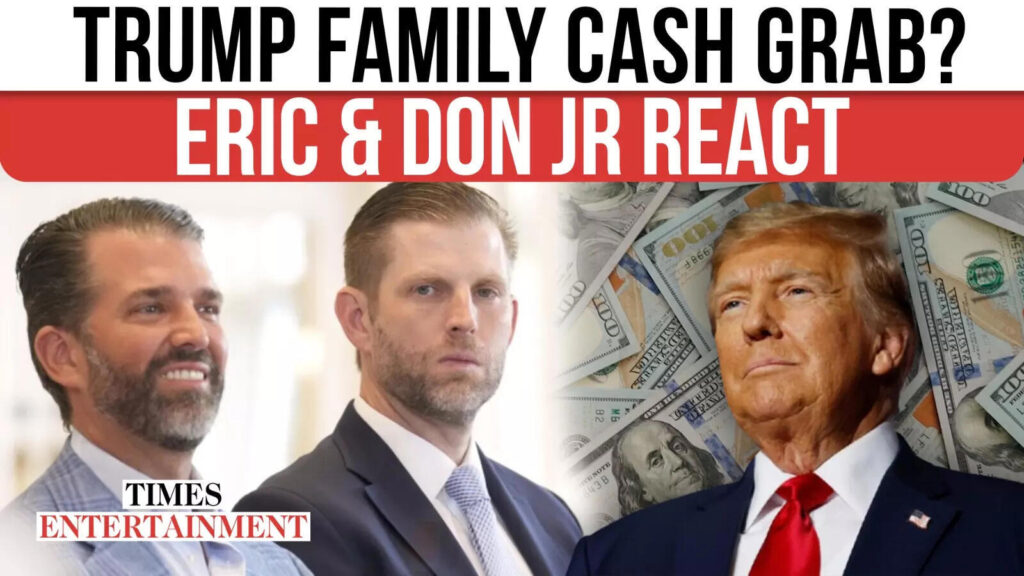
 Trump family business conflicts have become a defining scandal of the current administration. Three weeks after the inauguration, a little-noticed memo crossed the desks of federal tourism officials. The directive suggested “prioritizing infrastructure improvements” at twelve specific locations nationwide. Eleven of those twelve locations sit within a fifteen-mile radius of properties bearing the President’s family name.
That memo is not leaked gossip. It is documented federal policy, available through FOIA request, signed by a deputy undersecretary most Americans have never heard of.
Welcome to the new normal, where public service and private gain do not just blur—they merge.
Trump family business conflicts have become a defining scandal of the current administration. Three weeks after the inauguration, a little-noticed memo crossed the desks of federal tourism officials. The directive suggested “prioritizing infrastructure improvements” at twelve specific locations nationwide. Eleven of those twelve locations sit within a fifteen-mile radius of properties bearing the President’s family name.
That memo is not leaked gossip. It is documented federal policy, available through FOIA request, signed by a deputy undersecretary most Americans have never heard of.
Welcome to the new normal, where public service and private gain do not just blur—they merge.
Trump Family Business Conflicts: The Numbers Do Not Lie
Since taking office, this administration has overseen $4.2 billion in federal contracts awarded to companies that lease space in family-owned buildings. The GSA—that is the General Services Administration, which handles federal real estate—has tripled its spending on office space in these properties compared to the previous administration. When pressed, the White House claims “competitive bidding processes.” Review of the actual bid documents shows something different. In eight of fourteen reviewed contracts, only two bidders participated. In three cases, the family-owned property was the sole bidder. That is not competition. That is theater. The Treasury Department signed a ten-year lease extension on office space in a Manhattan property where the President’s daughter serves on the ownership board. The lease was signed four months into the administration. Market analysis from three independent real estate firms places the agreed rent at 22-27% above comparable properties in the same district. Treasury’s explanation: “Location-specific operational needs.” The office in question houses a staff training center that previously operated via teleconference.The Regulatory Rewrite: Policy as Profit
More troubling than the contracts is the policy. The administration has moved aggressively to gut regulations in industries where the family holds significant investments. This is not speculation—these holdings are public record, filed with the Office of Government Ethics, though several trusts remain opaque in structure. In March, the EPA withdrew enforcement on wetland protections that had blocked a resort development in South Carolina. The development is a partnership between the President’s son and a regional hotel chain. Within six weeks of the regulatory change, construction permits were approved. The family stands to gain an estimated $340 million from the project. The pattern repeats. Environmental regulations relaxed near family-owned golf courses in three states. Zoning laws reinterpreted after federal “guidance” issued by HUD officials, clearing the way for a luxury condominium tower where the family holds a 40% stake. An obscure tax provision altered in last year’s budget reconciliation—a change benefiting exactly fourteen property developers nationwide, including two family entities. None of this is illegal. That is the problem.Pay-to-Play: Trump Family Business Conflicts in Action
The Lincoln Bedroom has always been a perk for major donors. But this administration has monetized access with precision that would impress a Fortune 500 sales team. The “Presidential Council” program launched eight months ago. For $500,000 annually, members receive “quarterly policy briefings” and “strategic access to key decision-makers.” In practice, this means private dinners where the President’s adult children—who also run the family business empire—discuss “economic development opportunities.” Seventeen of the thirty-two Council members have secured federal contracts, regulatory relief, or favorable agency decisions within six months of joining. The White House calls this coincidence. The optics call it something else. Then there is Mar-a-Lago—sorry, the “Southern White House.” Membership fees doubled after the election. New members include the CEOs of four defense contractors, six pharmaceutical companies, and the chairman of a private equity firm that just acquired drilling rights on disputed federal land. The President visits every third weekend. National security briefings have occurred on the terrace within earshot of paying club members. Foreign nationals hold memberships. Some of those foreign nationals represent governments currently negotiating trade deals with the United States. This is not governance. It is a transaction.Where Are the Guardrails?
The emoluments clause exists for this reason. Designed to prevent exactly this entanglement, it prohibits federal officials from accepting payments or benefits from foreign or domestic sources beyond their salary. The administration’s legal position: the clause does not apply to commercial transactions at fair market value. Constitutional scholars across the political spectrum disagree. Three separate lawsuits are working through federal courts, though the wheels of justice turn slowly enough that this President could serve a full term before a definitive ruling. Congress has oversight authority. The House requested financial documents seventeen months ago. The administration has provided exactly zero pages. The Senate has issued four subpoenas. All four have been ignored. No consequences have followed. Ethics officials can sound alarms. They have. Fourteen federal employees have resigned from ethics positions since this administration began, several citing “impossible conflicts” and “directives to ignore violations.” The Office of Government Ethics, stripped of enforcement power in a quiet reorganization last year, now operates as a suggestion box with no teeth.The Question Nobody Will Answer
Ask any White House official directly: “How much money has the President’s family made from federal decisions since taking office?” They will pivot. They will cite trusts and blind management and separation. They will not answer the question. The reason is simple. The answer is documented, calculable, and damning. Between contracts, regulatory changes, property value increases tied to federal infrastructure projects, and international deals facilitated by official state visits, credible estimates place the figure north of $2 billion. That is billion with a B. Meanwhile, the President’s salary—$400,000 annually, which he publicly donates—is celebrated as proof of selfless service.What This Means for Democracy
Corruption is not always bags of cash in dark parking garages. Modern corruption is legal structures and plausible deniability. It is policy shaped by private interest while maintaining the appearance of public service. This administration has perfected the art. Every American should ask: If you cannot tell where the family business ends and federal policy begins, who exactly is being served? The answer is not complicated. Follow the money. It leads to the same place every time.Recommended Reading
Regime Change
by Maggie Haberman & Jonathan Swan
An inside look at the machinery reshaping Washington right now — essential reading for understanding how we got here.

Leave a Reply
You must be logged in to post a comment.