

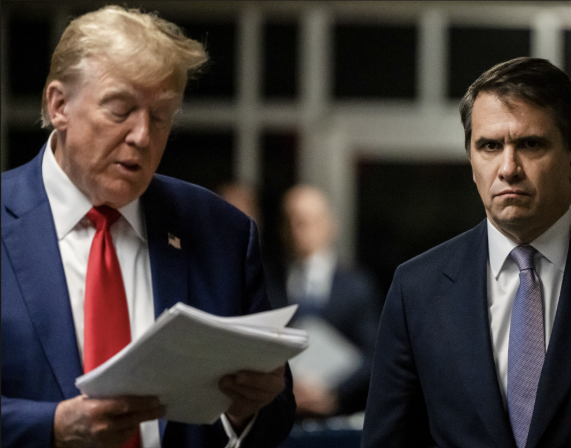
The Trump IRS settlement is one of those moments in politics when the machinery of government produces an outcome so perplexing that even seasoned observers pause. The Trump family's ongoing legal entanglement with the Internal Revenue Service—featuring a $10 billion lawsuit, a $1.7 billion settlement fund, and a reported agreement to halt mandatory presidential audits—is one of those moments.
Let me state the facts plainly, because they matter more than the noise.
The Trump IRS Settlement: What We Know
Former President Donald Trump is suing the IRS for $10 billion, alleging improper disclosure of his tax returns to Congress. This isn't theater. The lawsuit, filed in federal court, stems from the House Ways and Means Committee's 2022 decision to release six years of Trump's tax documents—a move Trump's legal team characterizes as unlawful and politically motivated. The suit names the United States, the Treasury Department, and the IRS as defendants.
Meanwhile, separate reporting indicates that a $1.7 billion settlement fund has been established—though the precise connection to Trump's lawsuit remains deliberately opaque in official documentation. What we know: the fund exists. What we don't know with certainty: its exact purpose, its funding mechanism, or whether it represents a pre-negotiated settlement structure for multiple tax disputes.
And then there's the third rail: reports that the Trump family secured an agreement exempting them from the IRS's mandatory audit program for sitting presidents. This program, established as policy rather than law, has been standard practice since the Nixon era. Its sudden inapplicability to one particular family raises questions that transcend partisan allegiance.
The blowback has been swift and predictable—but not entirely along party lines.
Congressional Response to the Trump IRS Settlement
Democratic lawmakers, led by Senator Ron Wyden and Representative Richard Neal, have called for immediate congressional hearings. Wyden's statement was characteristically blunt: "If the wealthiest among us can sue their way out of accountability and negotiate their way out of oversight, we don't have a tax system. We have a protection racket for the powerful."
Neal, who chaired the Ways and Means Committee when Trump's returns were released, framed the issue as constitutional: "Congress exercised its lawful oversight authority. If that becomes grounds for a billion-dollar settlement, we've fundamentally undermined separation of powers."
But the Republican response has been less monolithic than one might expect.
Senator Mitt Romney, never one to mince words about Trump, told reporters: "I need to understand the legal basis for any settlement and why presidential audits would be suspended. Transparency matters, regardless of party." Senator Lisa Murkowski echoed concerns about precedent: "What message does this send about equal application of tax law?"
Even within Trump's circle, there's been notable silence from fiscal conservatives who built careers on IRS enforcement and deficit reduction. The absence of vocal support speaks volumes.
Here's what troubles me—and should trouble you.
The American tax system rests on a principle older than the Republic itself: equality before the law. Not equality of outcome, but equality of process. When that process appears negotiable for those with sufficient resources and legal firepower, the system's legitimacy erodes.
I've covered tax policy for two decades. I've seen corporations negotiate settlements. I've reported on high-net-worth individuals contesting valuations and deductions. That's how the system works—imperfectly, sometimes unjustly, but within established parameters.
What I haven't seen is a former president suing for damages larger than the GDP of several small nations while simultaneously securing exemption from oversight mechanisms designed specifically for presidential accountability.
The $10 billion figure itself deserves scrutiny. Trump's legal team argues this represents damages from privacy violations and reputational harm. But quantifying reputational damage for a public figure who voluntarily entered politics—and who consistently refused to voluntarily release tax returns, breaking decades of precedent—requires legal creativity of the highest order.
The $1.7 billion settlement fund is equally perplexing. If it's unrelated to Trump's lawsuit, why establish it now? If it is related, why the opacity? Settlement funds of this magnitude typically come with extensive public documentation, especially when taxpayer money is involved.
And the audit exemption—this is where the story moves from concerning to genuinely troubling.
Presidential audits exist because of Richard Nixon's tax controversies. They're not punitive; they're protective—for the office, for the public, and frankly, for the president. They ensure that financial decisions made under the pressure of executive responsibility meet legal standards. Suspending them doesn't protect Trump; it exposes him to greater suspicion and eliminates a mechanism that could actually clear him of wrongdoing.
Both parties should recognize the danger here. If a Democratic president negotiated similar terms, would Republicans accept it? If a future progressive administration secured exemption from financial oversight, would that serve conservative interests?
The answer, obviously, is no. Which suggests this isn't really about Trump—it's about whether accountability scales with power or inversely to it.
I'm not arguing Trump's lawsuit lacks merit. Courts will determine that. I'm not suggesting the IRS acted flawlessly in handling his returns. Oversight bodies will investigate.
What I'm saying is this: the American people deserve to know, in clear terms, why a former president is suing for $10 billion, what a $1.7 billion fund is actually for, and under what legal authority presidential audits can be suspended for any individual.
Those aren't partisan questions. They're civic ones.
And until they're answered with the transparency the moment demands, we're left with what looks increasingly like a tiered system of accountability—one set of rules for most Americans, and another for those with the resources to rewrite them.
That's not a sustainable foundation for a republic. It's the blueprint for something else entirely.
The question isn't whether Trump deserves his day in court. He does. The question is whether the rest of us get ours.
Recommended Reading
Regime Change
by Maggie Haberman & Jonathan Swan
An inside look at the machinery reshaping Washington right now — essential reading for understanding how we got here.

Leave a Reply
You must be logged in to post a comment.