

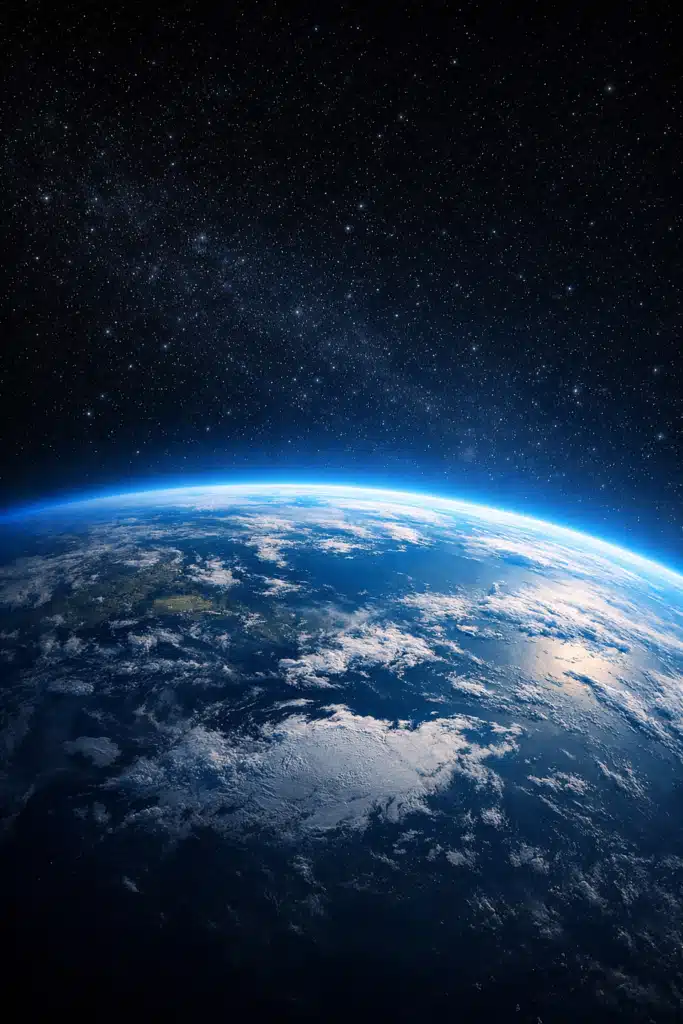
The ozone hole is closing. Not might be closing, not showing encouraging signs—is closing. And for once, we can say with 95 percent statistical confidence that it’s closing because we, collectively, as a species, decided to stop punching a hole in our atmospheric sunscreen.
A new study led by MIT researchers and published in Nature has done something remarkable for ozone hole recovery: it’s proven, quantitatively, that when we ban the chemicals destroying the ozone layer, the ozone layer stops being destroyed. Revolutionary stuff, I know.
The Part Where Science Gets Precise
Scientists have been watching the Antarctic ozone hole shrink for years. We’ve had qualitative evidence—the kind you can see in satellite photos and trend lines. But qualitative evidence leaves room for doubt. Maybe it was just weather. Maybe El Niño was having a good decade. Maybe the polar vortex was feeling generous.
Enter graduate student Peidong Wang and Professor Susan Solomon from MIT’s Department of Earth, Atmospheric and Planetary Sciences, along with research scientist Kane Stone and collaborators from other institutions. They borrowed a technique called “fingerprinting” from climate science—a method pioneered by Nobel laureate Klaus Hasselmann that isolates specific signals from the chaos of natural variability.
Think of it like this: the atmosphere is a room full of people all talking at once. Fingerprinting is how you pick out one conversation and confirm, yes, that person is definitely saying what you think they’re saying.
The MIT team ran multiple simulations of Earth’s atmosphere under different conditions—parallel worlds where greenhouse gases stayed flat, where ozone-depleting substances never decreased, where everything changed at once. They mapped how ozone behaved across seasons and altitudes in each scenario, then identified a distinct pattern—a fingerprint—that appeared only when ozone-depleting substances declined.
Then they looked for that fingerprint in real satellite data from 2005 to now.
They found it. Clear as day by 2018.
Translation: People Did This
Here’s what that means in plain English: when countries agreed to phase out chlorofluorocarbons (CFCs)—the chemicals used in refrigerators, air conditioners, aerosol cans, and insulation—the ozone layer started healing. Not because of a lucky weather pattern. Not because volcanoes took a break. Because we stopped using the stuff that was breaking it.
“There’s been a lot of qualitative evidence showing that the Antarctic ozone hole is getting better,” Solomon said in MIT’s release. “This is really the first study that has quantified confidence in the recovery of the ozone hole. The conclusion is, with 95 percent confidence, it is recovering. Which is awesome. And it shows we can actually solve environmental problems.”
Let that sit for a second. We can actually solve environmental problems.
The Backstory You Need
In 1985, scientists discovered that every Antarctic spring—September through December—a massive “hole” opened in the ozone layer. Ozone, for the record, is the stratosphere’s natural UV-blocking layer, Earth’s built-in sunscreen. Without it, ultraviolet radiation pours through, causing skin cancer, cataracts, and ecological disruption.
In 1986, Solomon herself—then at NOAA—led expeditions to Antarctica and gathered the evidence that pinned the blame on CFCs. When these chemicals drift into the stratosphere, they break down ozone under specific seasonal conditions. The science was fast, the alarm was real, and in 1987, the world drafted the Montreal Protocol, an international treaty to phase out ozone-depleting substances.
No debate. No decades of waiting. The treaty was signed, nations complied, and industry adapted.
By 2016, Solomon’s team reported that the ozone hole was shrinking, especially in September. But uncertainty lingered. Was it the treaty, or just luck?
Now we know. It was the treaty.
What Happens Next
If current trends hold—and the fingerprint keeps strengthening—Solomon estimates we might see individual years with no ozone depletion over Antarctica by around 2035. Eventually, the hole should close for good.
“Some of you will see the ozone hole go away completely in your lifetimes,” Solomon said. “And people did that.”
People. Did. That.
Not technology as some abstract force. Not market dynamics working themselves out. People—governments, scientists, industries, citizens—agreeing on a problem and solving it.
Why This Matters Now
Wang, the study’s lead author, put it simply: “This gives us confidence in the fingerprint. It also gives us confidence that we can solve environmental problems. What we can learn from ozone studies is how different countries can swiftly follow these treaties to decrease emissions.”
The Montreal Protocol worked because the science was clear, the harm was visible, and the alternatives were achievable. CFCs were replaced. Refrigerators still work. The sky didn’t fall. The ozone layer is healing.
It’s a blueprint. Not a perfect one—climate change is vastly more complex—but a blueprint nonetheless. When the evidence is overwhelming and the will is there, we can act. And when we act, it works.
That contrast looks stark against recent EPA emissions rollbacks, which show how quickly hard-won progress can erode.
The truth, as usual, was hiding in the data. MIT pulled it out, quantified it, and handed us proof: collective action produces measurable results.
Now the question is whether we’re paying attention—and whether this time, we’ll remember what we’re capable of when we decide to care.
This research was supported by the National Science Foundation and NASA. Full credit to the MIT team—Solomon, Wang, Stone, and collaborators—for doing the meticulous work that turns hope into evidence.
So here’s my question for you: If we managed to heal the ozone hole in a generation, what’s stopping us from applying that same urgency elsewhere? What would it take for you to believe we could do it again?

Leave a Reply
You must be logged in to post a comment.